
On The Agenda-Setting Power Of AI Companies
Published:
Which Futures does AI let us imagine?
Oriane Peter - September 2026
If we wanted a map to represent the world with complete accuracy, it would have to be as large as the world itself. Any attempt to represent or describe our realities is inherently incomplete: we must choose to focus on certain details and ignore others. Yet this necessary simplification has deep political implications: who gets to draw up the map we use to navigate the world, and how might they use it to advance their own interests?
Traditional media is one institution that held, and to some extent still holds, the power to design reality’s borders. As American political scientist Bernard Cohen puts it:
“The media may not be successful much of the time in telling people what to think, but it is stunningly successful in telling its readers what to think about.” > — Bernard Cohen (1963)
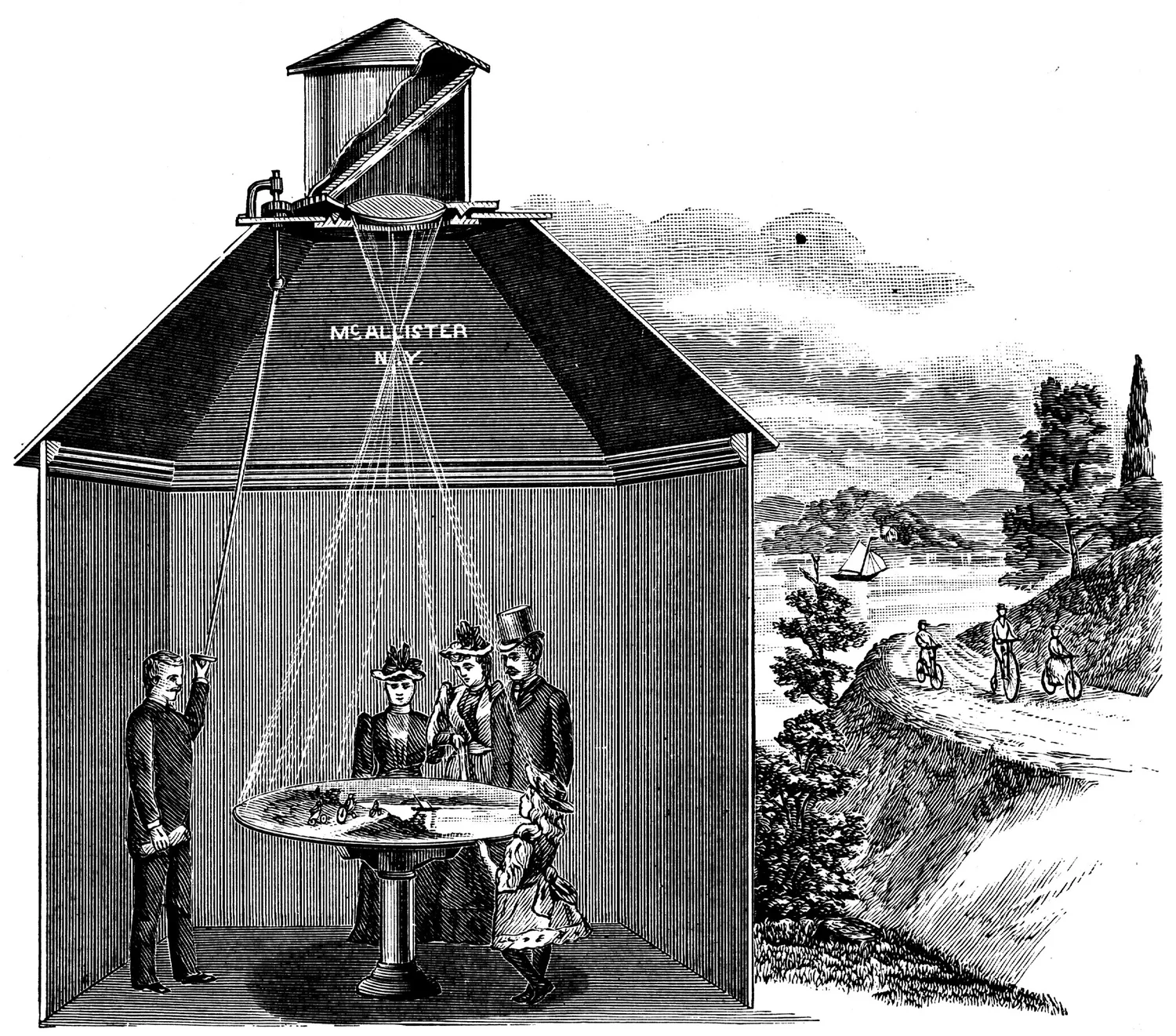
This is the premise of Agenda-Setting Theory, established by McCombs and Shaw in their now classic study of local news during the 1968 US presidential election. They found a direct link between the prominence a story receives in the news and the importance the viewers assign to it. The theory thus suggests that our worldviews are shaped by the degree to which we are exposed to particular issues, implying that the media derive their power from setting topic saliency. When news feeds get flooded with warnings of impending AI doom, it is worth asking: which other stories did not make the headlines, and why?
Do AI systems exert a similar political influence over their users? This is the central question of our recent paper.
Relevantly, these AI assistants increasingly mediate how we access information online. However, rather than exposing us to the full width of the web, they narrow our view to a restricted subset, effectively shrinking the mapped part of the internet. The Large Language Models (LLMs) powering these assistants produce remarkably homogeneous responses, driven in part by alignment techniques that steer models toward a narrow band of ‘preferred’ answers. As a result, users only get a fraction of the possible answers to their request. Worryingly, this narrow ‘preferred’ slice is the same across major providers, from OpenAI to DeepSeek. AI assistant have this been described as sharing a Hivemind, all consistently given the same limited set of answers, or making the same jokes. AI designers are therefore becoming the gatekeepers, redrawing the boundaries of what counts as ‘preferred’ or ‘safe’ information, simplifying our picture of the world once again. But what actually survives inside these shrunken boundaries? We set out to investigate, arguing that the topics making the cut reveal the agenda AI may be setting.
Trying to figure out the politics of AI is not a new line of inquiry: there are several studies asking whether AI leans left or right on a given topic, for example. What we argue is that an AI’s stance on a given topic matters less than its tendency to bring up certain topics in the first place. To understand that tendency, we map the political influence of AI by quantifying topic saliency in LLMs. Since alignment is one of the key stages responsible for narrowing model outputs, we measured how topic saliency shifts pre- and post-alignment across 16 different models, tracking precisely which subjects are amplified or suppressed. We focused specifically on convergent effects: the systemic topic preferences that persist regardless of the AI provider, and are thus most susceptible to reshape public discourse.
We centered our study on climate change, owing to its existential urgency and because effective climate action demands radical heterogeneity. There is no silver bullet against climate collapse: tackling it requires many different solutions from many different people. If voters’ attention becomes redirected to only a subset of avenue for change, so too does politicians’ agenda. Thus, AI restricting which solutions to climate change we think about threatens to critically erode our collective capacity to act.
Across all models, we found that AI alignment heavily promotes technological and infrastructural solutions over social or political ones. This effect strengthens as model capacity increases. After alignment, for instance, the odds of renewable energy being recommended as a solution jump by a factor of 55. Conversely, calls for economic restructuring or appeals to political activism drop by more than sevenfold.
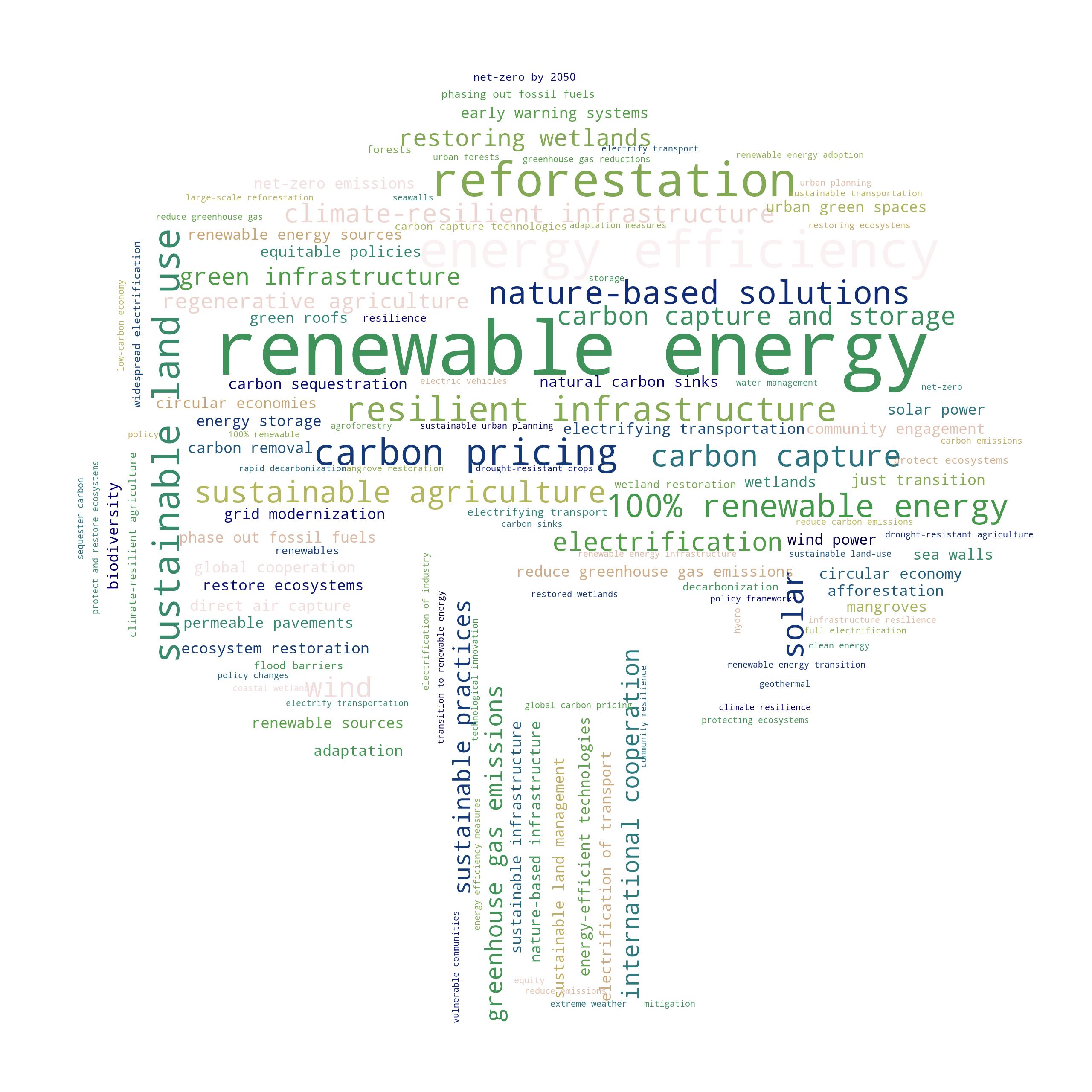
This is not to say that renewable energy and resilient infrastructure are not useful pursuits in the face of climate collapse. However, a hyperfocus on technological and practical solutions risks limiting our capacity for action, potentially reducing the flow of resources and support toward necessary social, economic, and political change. We also found a similar mechanism at play in discussions around poverty and homelessness, where models would systematically promote ideas such as universal basic income or reskilling while foregoing valid agendas such as pension or landlord reforms.
By collapsing our understanding of the world, and narrowing the levers available to act on it, AI systems risk restricting our collective capacity for political change. This problem is compounded by the fact that a small group of private companies decide how AI models are aligned, without transparency. In doing so, they inherit some of the agenda-setting power held by traditional media.
Recent public debates around AI doom and safety have raised calls for increased transparency in model alignment. This transparency is also crucial given the emergence of this new form of agenda-setting power: we must be able to inspect the map AI companies are drawing for us to understand the seas they allow us to navigate.